Monday, May 31, 2010

Tokina AT-X 80-200mm f2.8 Contax Mount

Back in March, I mentioned that I bought a Tokina 80-200mmf 2.8 zoom in Contax mount. This is the lens my friend Tony bought early 1980 from Broadway Camera beside Henry's. It was jaw dropping expensive. If I remember correctly, it was more than $700 CAD. Being a poor student, I could only envy Tony. That was more than 25 years ago.

Anyway, I thought it was a steal for $25. I have only taken it out today to try it, as I am not a zoom person, especially long zooms. As with most 80-200mm f2.8 lenses, this one is quite heavy. The built quality is exemplary, focusing action is smooth and easy. But, there is one really bad design -- the hood. It's a clip-on type that could get knocked and lost. In fact, I lost it today within 1/2 hour of walking holding the lens. @#%@#$!

The only area I find not up to the flagship status of this lens is the image quality. It's a little soft wide open. Although improved by stopping down, this lens does not give me that razor sharp image that I expect from an expensive lens like this. Although I have not used the Tamron AdaptAll version of the 70-200mm f2.8, I bet you a dollar that it's far better.

I sound very negative about this lens, that's only because I expected much more for the amount of money one has to fork out to buy one. It give you pictures at f2.8 where other slower lenses can't, but image quality could be a little better.


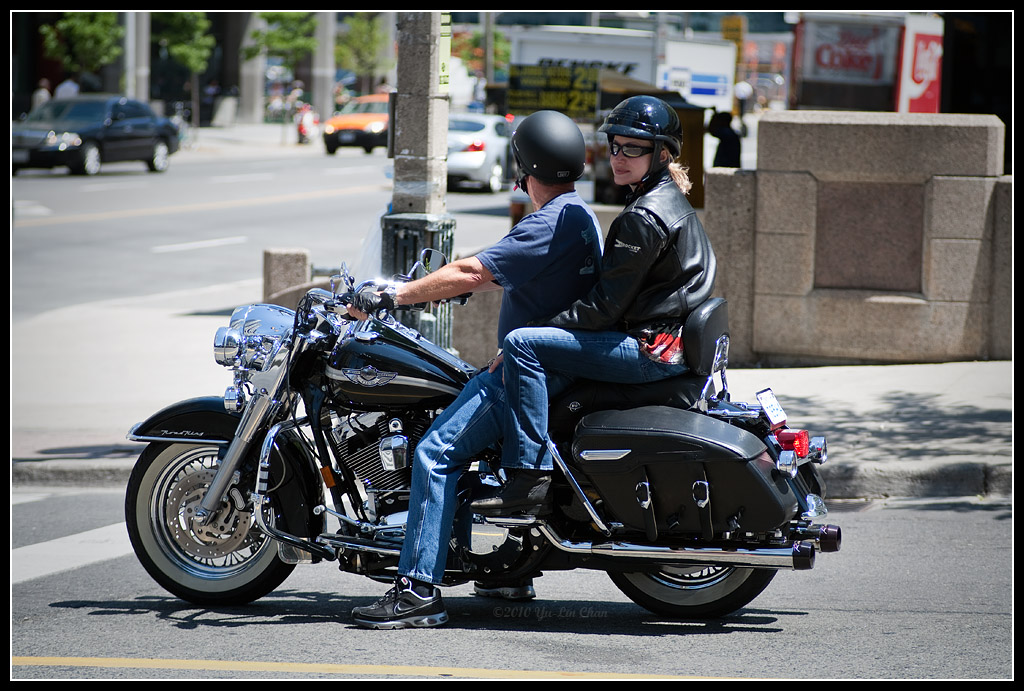
Harley Road King. Nice bike, friendly riders who waved at me as I took the picture -- Canon 5D & Tokina 80-200mm f2.8 at f4. Embiggen.


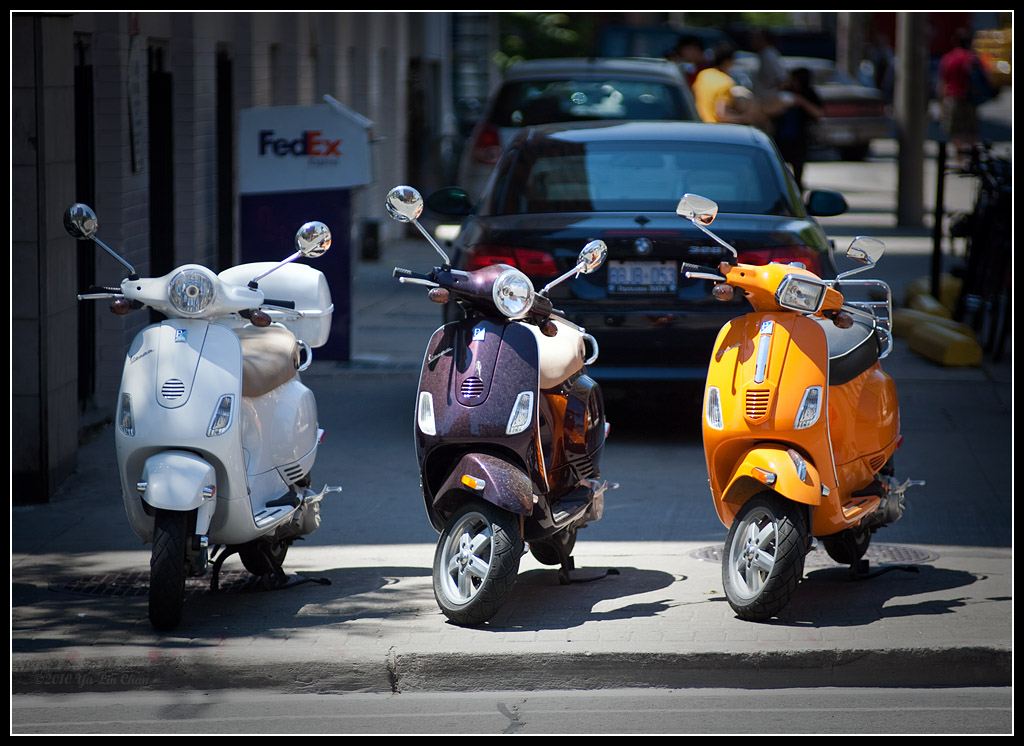
The Vespa Trio -- Canon 5D & Tokina AT-X 80-200mm f2.8. Embiggen.


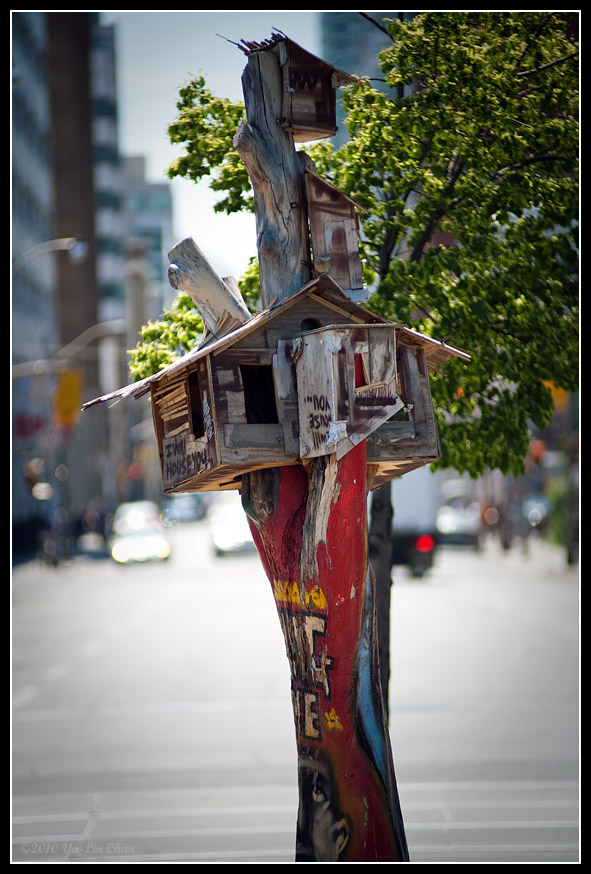
The Hug Me Tree - Canon 5D & Tokina AT-X 80-200mm f2.8 at f2.8.

Sunday, May 30, 2010

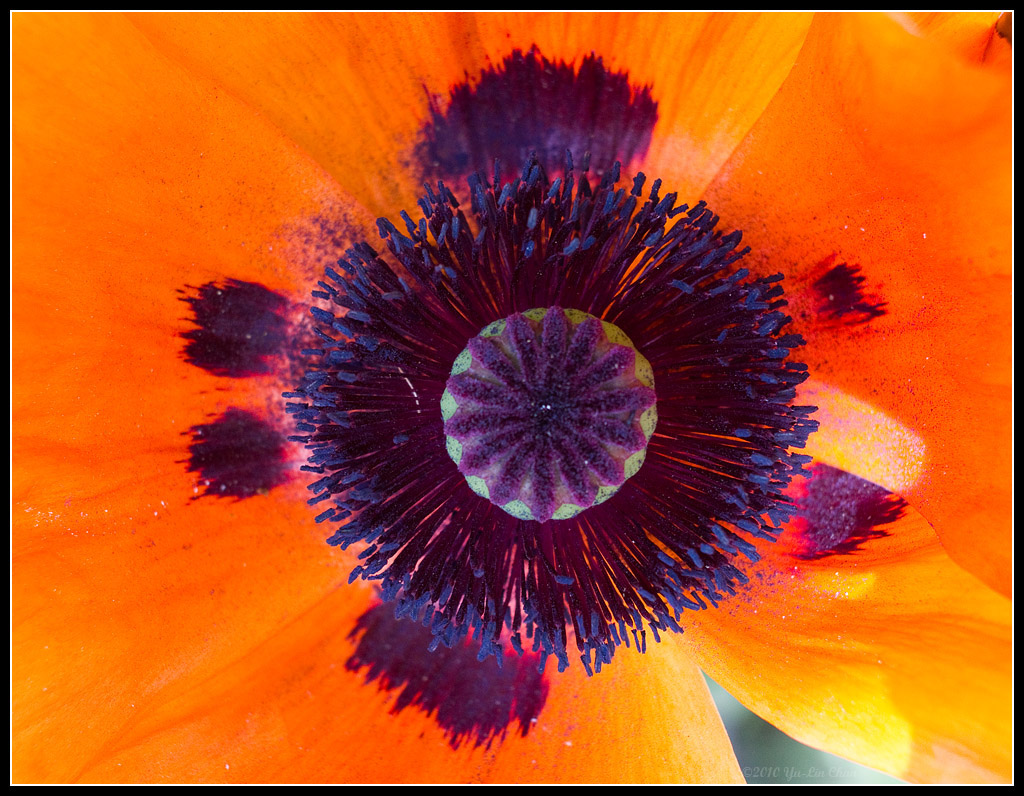
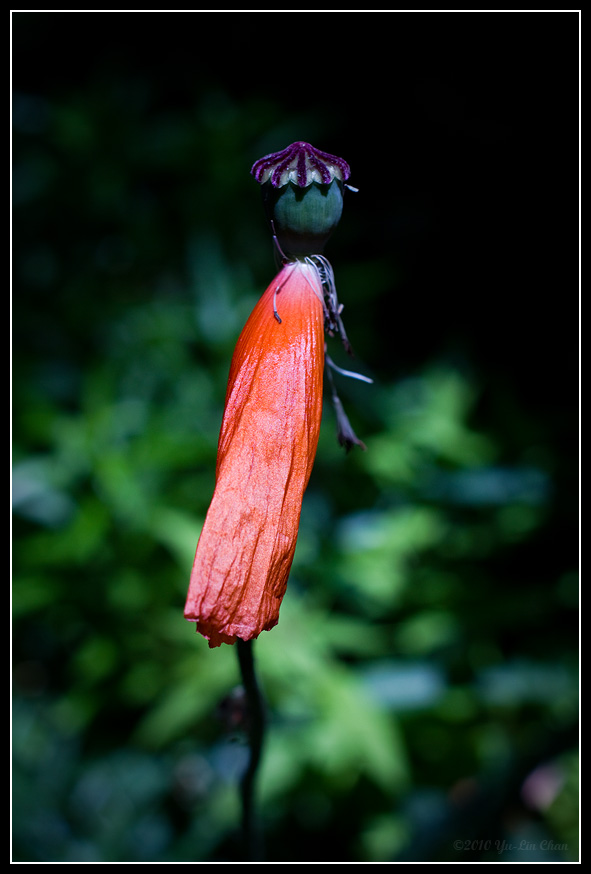
Orange Poppy


Poppy Core -- Canon T2i & Leica-R 28mm f2.8 Elmarit. Larger Picture.

You can see poppies everywhere in the spring, but at this time of the spring, most have already lost their petal. It's a different kind of beauty, I think.

Saturday, May 29, 2010

Canon 18-55mm f3.5-5.6 IS Lens - 3 Months Later

OK, I haven't been using the kit lens continuously for 3 months, but it's one of the most used kit lens I have had. I have shot about 1000 frames with this lens, so I think I can draw some conclusions.

Let's get the conclusion out of the way first. The 18-55mm f3.5-5.6 IS lens is totally worth the money. I am very glad that I bought it with the camera. It's far better than the non IS version that came with my original Rebel 300D.

The plastic built of the lens has actually held up well so far. The cheap plastic doesn't bother me too much, simply I don't focus manually with it. If I do, it would drive me insane. In fact, for the light weight, I quite enjoy using it as a walk around lens for day time shooting.

For a non-USM lens, it focuses very fast and quietly. I don't really have any focusing issues with the lens, possibly because I usually shoot at rather small apertures at f8 or f11. This is the sweet spot of the lens.

In terms of image quality, I find no faults, considering the low price paid, with Image Stabilization to boot. The lens is very sharp and contrasty. Adding a polarizing filter will make the colours come out much better than the naked lens. Strangely enough, there are six aperture blades, verses five for some lenses that are even more expensive. I consider the bokeh of this kit lens very acceptable. The Image Stabilization (IS) is quite effective and impressive, and this begs the question: If an effective IS can be built into a cheap lens like this, why not include it in all lenses? Certainly the cost is minimal.

The negative part of the lens, as we already know, is it's slowness at the long end. F5.6 is the optimal aperture for most primes, and this is the starting aperture for the kit lens at 55mm. It's almost impossible to use this lens at 55mm indoors without flash, which limits its usefulness. The other negative part of course, is the cheap built quality.

For most people, I suspect that they will be happy with the lens, and that many would be happy to have it as their only lens. Some of us buy it to get wide angle without forking out a king's ransom. It's a perfect complement to your primes, or when you want to go light with one lens in good light. It's one heck of a bargain.


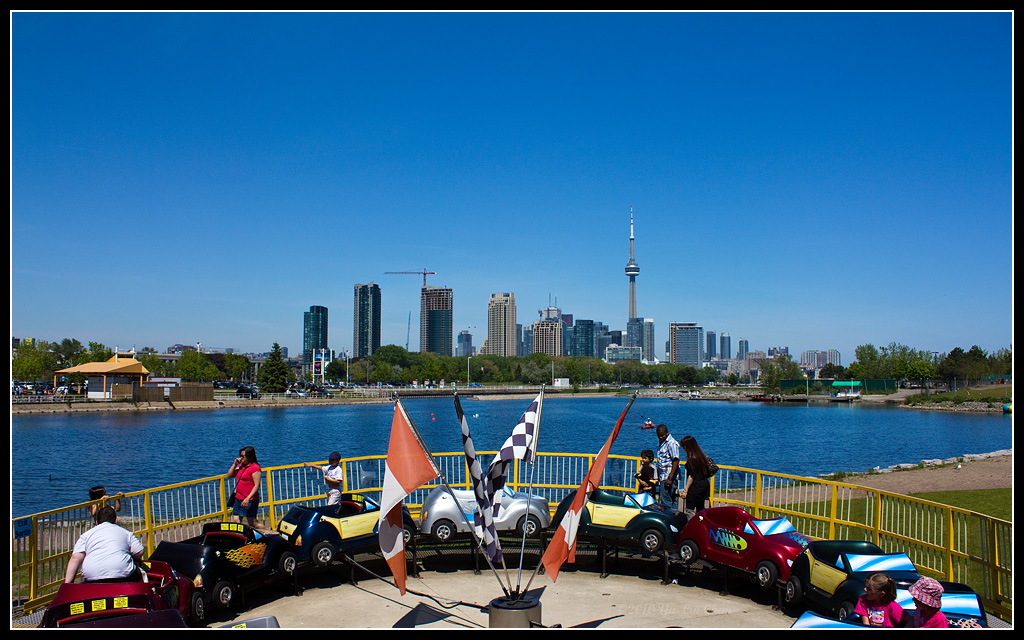
Ontario Place -- Canon Digital Rebel 550D & 18-55mm IS Kit Lens. Embiggen.


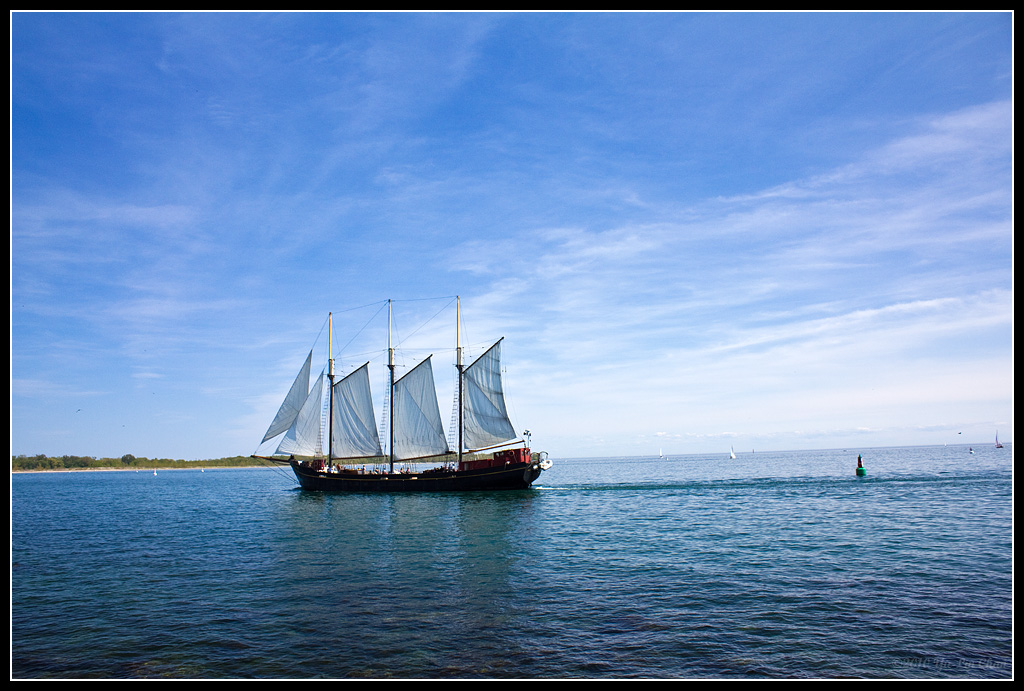
Tall Ship -- Canon Digital Rebel 550D & 18-55mm IS Kit Lens. Embiggen.


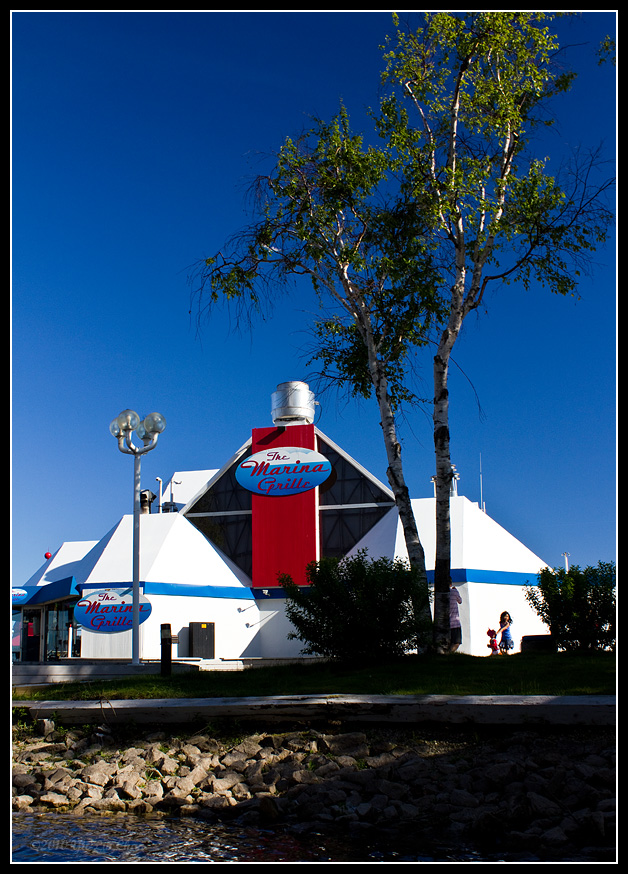
The Marina Grille, Ontario Place -- Canon Digital Rebel 550D & 18-55mm IS Kit Lens.

Friday, May 28, 2010

Purple


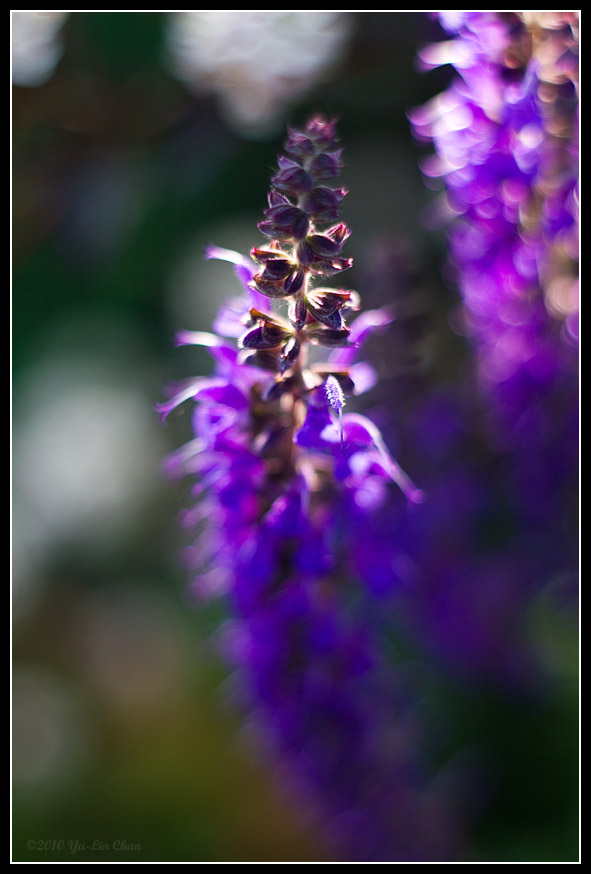
Purple -- Canon Digital Rebel 550D & Pentacon 50mm f1.8 MC @ f1.8.

Pentacon lenses deserve more respect than they currently have. Some are truly excellent, like this MC version of the 50mm f1.8. Will talk more about this lens in a later post.

Thursday, May 27, 2010

Meyer-Optik Domiplan 50mm f2.8

If there is an M42 lens that is common, cheap, and has mediocre reputation, the Domiplan 50mm f2.8 is probably the prime candidate. You can still buy one for the cost of a lunch today. This East German lens has a few versions, and was available as Exakta or M42 mount. I personally have two versions of them: a pre-set aperture type, and a automatic aperture type. The one with the pre-set aperture does not work -- a very common aperture problem with this lens.

Doesn't matter from which angle you look at it, the Domiplan is a cheap lens. Designed to be cheap, made cheap, and feels cheap. Add to the fact that it does not have a manual aperture setting, using it on DSLRs is a challenge, unless your adapter was designed to handle this kind of lens. This is the reason my copy of the Domiplan was sitting on the shelf for a good five years, until I got a new M42 adapter with confirmation chip, which surprisingly, supports automatic aperture lenses.

[Update Oct-8-2010: The Domiplan is in fact a Triplet design.  Thanks for all who pointed this out.
The Domiplan has a Tessar design, which, in theory, should be pretty good optically. Invented almost a hundred years ago, the Tessar design is very common and was adapted by many manufacturers. The major advantage is the small size that can be made from this design. Most pancake lenses, such as the Pentax-M 40mm f2.8 and the Contax 45mm f2.8 employs the Tessar design. Zeiss refers to the Contax 45mm f2.8 pancake as the "eagle eye of your camera". Many just called it the "Eagle Eye", referring to its excellent sharpness.

The disadvantage of the Tessar design, is that it can't be made very fast. That's why most have a maximum aperture of f2.8. Another minor short coming is the minimum focus distance is relatively long, compared to other designs for the 50mm focal length. For the Contax 45mm f2.8, it's 0.6m, and the Domiplan is 0.7m.

OK, enough bubbling, I am sure you want to know how bad it is, no?

I didn't use the Domiplan on the 5D, so at least for the time being, we are not going to talk about the far edge performance, just the area covered by the 1.6x sensor of the Canon 550D (T2i). But even then, I can tell you that don't expect miracles at the corners, even stopped way down.

You maybe surprised, but I found the lens to be quite decent, again, if you don't need sharp edges. It has that Meyer-Optiks signature at wide apertures which I like a lot. Even at f2.8, it's more than usable at the center of the image. Here is the 100% crop of one taken at f2.8:


Wide Open @ f2.8, 100% crop at the center. Notice the slightly luminous, low contrast quality, but at the same time, very sharp and shows good details -- Canon Digital Rebel 550D & Meyer-Optik Domiplan 50mm f2.8. Larger Size.

Stopping down improves the sharpness as well as contrast. I would even rate this lens very sharp at the center. For the money of a lunch, it's not bad, eh?

The bokeh is a little wonky for my taste, but it's a subjective thing. I am sure some will find it pleasing. It's not horrible by any means. Just not great to my eyes.


Bokeh at f2.8 -- Canon Digital Rebel 550D & Meyer-Optik Domiplan 50mm f2.8.

So, I wouldn't mind using this lens, but certainly not for landscape work, where edge sharpness is desired. I find that despite its somewhat bad reputation that it has, it can indeed capture some nice pictures. My copy has very coarse focusing, probably due to the lubricant dried up, but for the money, I would not complain.


I love summer, oh wait, it's not summer yet! But who cares? - Canon 550D & Domiplan 50mm f2.8.

To conclude, if you overlook it's cheap looks, rough built quality, and it's blurry edge, and for how little you pay, it's a big bang for your buck!


Bang for your buck -- Digital Rebel 550D & Domiplan 50mm f2.8.  Larger Size.
Wednesday, May 26, 2010

A Small Milestone

The last entry marked the 300th post I have written since I moved from LiveJournal and started on BlogSpot. I never expected that I would update the blog as often as I have. I am happy to say that writing for this blog motivates me to take more pictures. Almost daily, I would go out at lunch time and shoot a few pictures around my work place. Yes, I apologize for the same subjects that turns up over and over again. The good thing is, even the same subject can be photographed many times and still look different. This is the beauty of photography.

Thanks to all of you who read my blog. Your comments are appreciated. Hopefully I will continue my enthusiasm and keep the blog updated often.

Sigma XQ 55mm f2.8 Macro YS Mount

Before Sigma has the EX series for their auto focus lenses, it had the XQ series, mostly for the YS mount. Like the Ex series, the XQ series of lenses are a premium line that should perform better than the normal, no-XQ lenses.

The Simga XQ 55mm f2.8 lens was produced in the early 1970s. It has a 1:2 magnification ratio. Sigma didn't call it a macro lens, but a macro focusing lens. Technically, any lens that does not have a 1:1 reproduction ratio is not a true macro lens. Most macro lenses from that era have only 1/2 life size capabilities. Canon 100mm f4, Minolta 50mm f3.5, Nikon 55mm f3.5 and the 200mm f4, for example, are only capable of 1:2 ratio. They usually come with an extension tube or close up filter to achieve 1:1 macro.

Like the Vivitar 55mm f2.8 macro, the Sigma XQ 55mm f2.8 has a 62mm filter size. The Sigma is slightly larger lens, but the Vivitar is a true macro lens that can do 1:1 macro. Typical of old lenses, the build quality of the Sigma XQ 55mm f2.8 is excellent. Focusing is very smooth, although the focus ring does not travel as long as other macro lenses. At minimum focus distance, the front of the lens almost touches the subject being photographed.

In terms of optical qulity, well, there are very few bad macro lenses. This one performs as expected: Sharp! Even at f2.8, the lens is very sharp. Maybe I haven't shot enough with it, but the bokeh is not as nice as I had hoped. But the colour is quite nice.

YS lenses are relatively cheap, especially those without mounts. They can be bought for a few dollars, since finding the right mount would be difficult. Most people don't even know what a YS mount is. If you can get them cheap, you may be surprised by how good some of them are.


Barb wire & Onion flower - T2i & Sigma XQ 55mm f2.8 Macro. Embiggen.


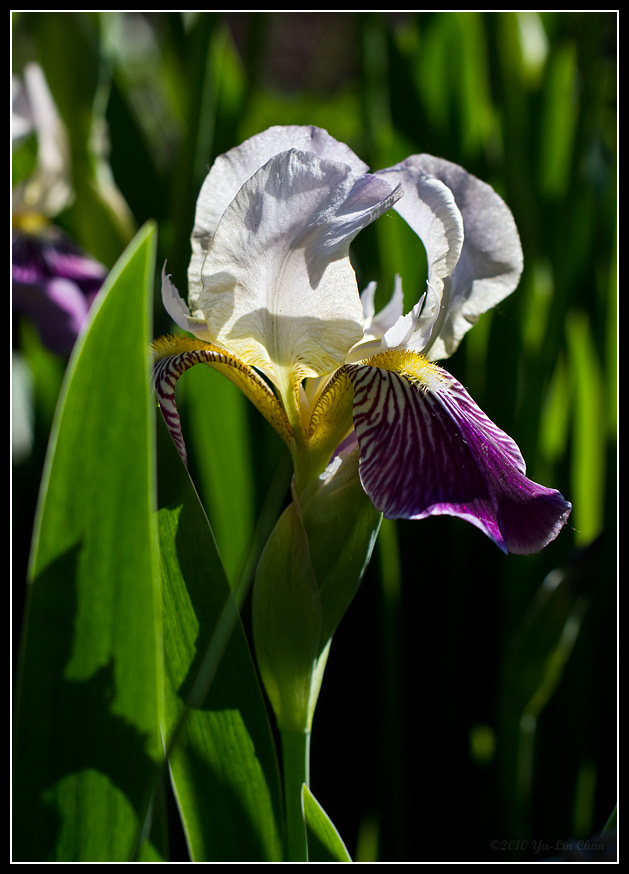
Iris -- T2i & Sigma XQ 55mm f2.8.


Puppy -- Canon T2i & Sigma XQ 55mm f2.8 Macro.

Tuesday, May 25, 2010

SigmaYamaki System (YS) Mount


Half Withered Puppy -- Canon T2i & Sigma XQ 55mm f2.8. Embiggen.

Back in the good old days, lenses were all mechanical. They didn't contain gazillions of computer chips and motors. With simple mount change, one lens would work on a different camera. For this reason, there were quite a few interchangeable mount systems. The obvious benefit of an interchangeable mount, is that if you own more than one camera brand, or you have just switched system, you only need to buy a different mount to use your existing lens, instead of buying another.

Many interchangeable mounts started in the 1960s. The original T-mount, TX-mount, Tamron's AdaptaMatic mount, and of course Sigma's Yamaki System (YS) mount, among others. Of all the interchangeable mounts, only the Tamron Adaptall evolved, and eventually survived to became Adaptall-2. But, the YS mount did enjoy a brief period of prosperity. There were few companies that made YS lenses besides Sigma. Accura, Sun, Soligor, and Vivitar, Spiratone were among them. YS mounts were available for all major cameras of the time. I have collected the M42 (two versions), Minolta SR and MD, Yashica Contax, Nikon F (there is also an IA version), Konica KR, Pentax K, Leica R, and I am sure a few others.

The YS adapter derived from the T-mount, but provided auto aperture function, whereas T-Mount lenses invariably have a pre-set aperture. This allowed lenses to have an open aperture metering. I believe the thread size is the same as the T-mount. Changing the mount is like mounting an M42 lens. The mount can be unscrewed, and a new mount can be replaced. Very straight forward.

Over the years, I have had a quite a few YS mount lenses, including the Vivitar 18mm f3.2, Sigma XQ 55mm f2.8 macro, Acurra Diamtic 35mm f2.8, and a few others. Next time we will talk about the Sigma XQ 55mm f2.8.

Saturday, May 22, 2010

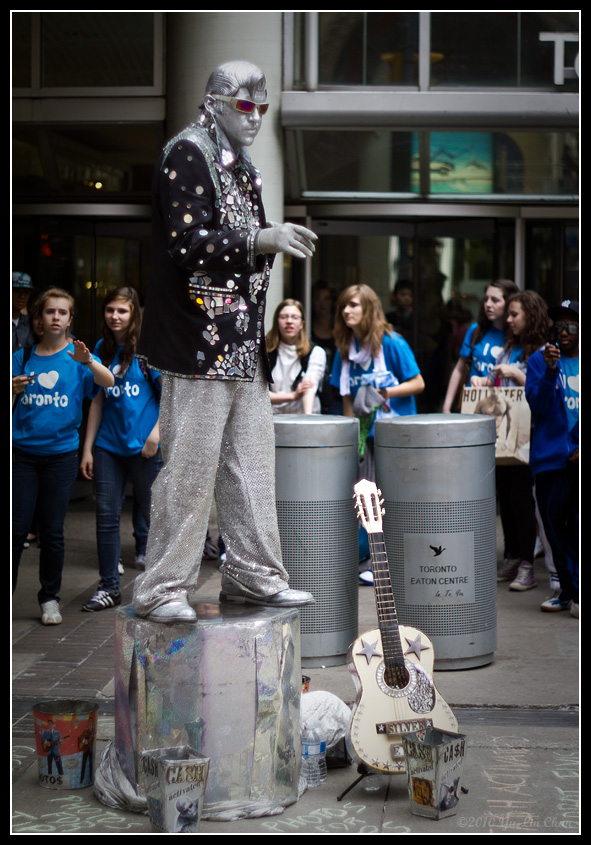
Robotic Silver Elvis


Silver Elvis -- Canon T2i & Fujica EBC 50mm f1.4 @ f1.4.

Silver Elvis has a new outfit. Last time I took a picture of him in April of 2009, he was completely silver, which actually looked better than the current silver and black.

Silver Elvis is a robot, and he is activated by the sound of money. I mean, activated by the sound when coins hit the money jar, for about 5 seconds. Then he will stand very still until more money hits the jar.

This picture doesn't look as good as one taken with the Konica 57mm f1.7 and the G1. For one thing, the crowd is larger so it was hard to isolate him, even when shot at f1.4. I have had the EBC 50mm f1.4 for a few years, but never really used it much. It's just too "common" LOL! But, the EBC 50mm f1.4 is one fabulous lens. Even sharper than the SMC Takumar at f1.4. The coating is fantastic. Little wonder the EBC lenses have a cult following.

Thursday, May 20, 2010

Wear the Pants


Wear the Pants -- Panasonic G1 & Cooke Ivotal 1 inch f1.4 c-mount lens.

The G1 has one of the better black and white filters than most other cameras I have used. Frequently better than what I can achieve with Photoshop and my limited knowledge.