Monday, March 22, 2010

Green Umbrellas at The Black Bull


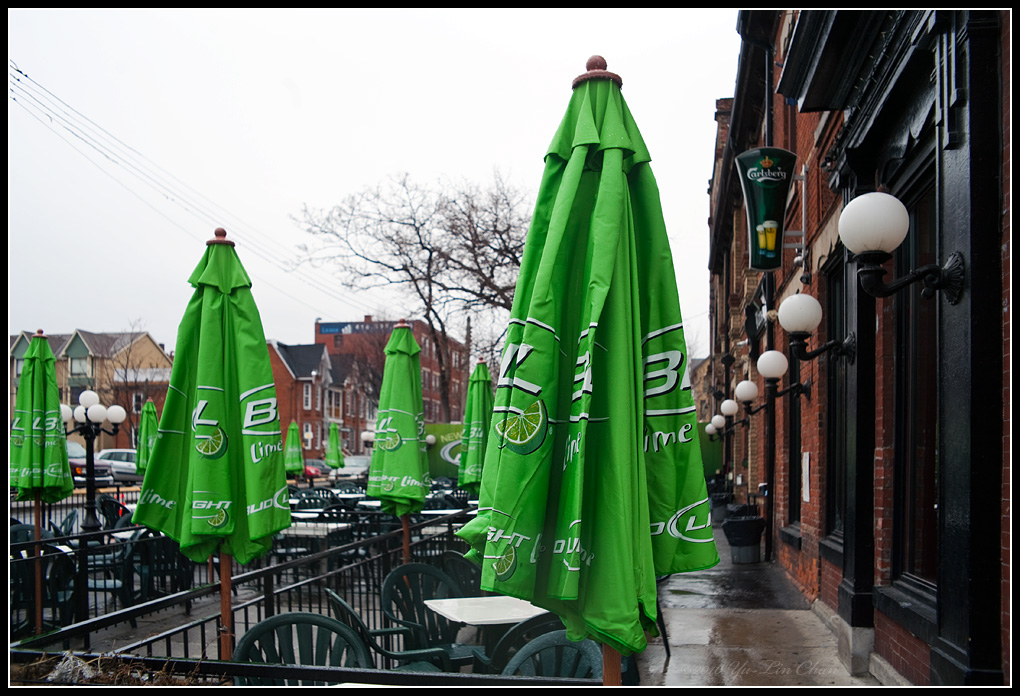
Green Umbrellas -- Canon 5D & Pentacon 29mm f2.8. Larger Picture.

This is probably the 4th copy of the Pentacon 29mm f2.8 lens I have had. The previous three had problems with one area or the other. This particular copy is near mint with original case. Very hard to get something this new, and has no workmanship flaws. I believe there is also a Meyer Optiks version of this lens. Pentacon has a cheaper sister lens, the 30mm f3.5 with pre-set aperture, which I used on the Pentax *ist DL with very good results.

Sunday, March 21, 2010

Carl Zeiss Jena 58mm f2 M42 Lens

Unearthed more stuff that I bought from the last camera show. One of them is the Carl Zeiss Jena 58mm f2 in M42 mount (this lens also came in Exakta mount). This lens was a standard lens for one of the early Praktica M42 bodies. The chrome body, after decades of aging, still looks beautiful. The focusing is ok, but the greased has dried up a little and thus is not as smooth focusing as it should be.

The pre-set type aperture of this lens consists of 10-blades, giving an almost circular shape. This should make the out of focus areas a bit more pleasing. This particular lens does not even have the Carl Zeiss name on it, just plain jena. This was common because East Germany was barred from using the Zeiss name, and lens designs such as Sonnar, Biogon, Planar, etc, outside of East Germany, so in order to sell the lenses overseas, they used Carl Zeiss Jena, aus jena, and, T for Tessar, B for Biotar, S for Sonnar, possibly some other designations on the lenses. This lens has jena B 2/58, to indicate that the design was Biotar from Carl Zeiss Jena having a 58mm focal length and f2 maximum aperture.

Most Biotar designs are great performers and this is no exception. It has beautiful bokeh, and is very sharp. I like how this lens renders the pictures. It's one of those lenses that doesn't cost a lot, but gives you much pleasure in return.


Glasses! -- T2i & Carl Zeiss Jena Biotar 58mm f2. Larger Picture.


Cubes. The out of focus area is rendered very nicely -- T2i & Carl Zeiss Jena Biotar 58mm f2. Larger Picture.

Saturday, March 20, 2010

Canon Rebel 550D T2i -- Play Back (Picture Review)

One of the best features of the T2i, is its gorgeous 3 inch 1 million pixel LCD screen at the back. This is the best screen on any Canon camera, to date. Even better than the 1D IV, 5D II. Reviewing pictures or video taken on the screen is a real joy.

Traditionally, Canon used a very small jpeg (about 200k?) file embedded in the RAW file for playbacks. Basically, you are looking at a tiny picture, however many times you enlarge it. For this reason, checking critical focus was a huge problem, because you can not be sure what you are looking at is representative of what the picture is. As late as the 1D Mark III, it was still done this way.

The T2i, surprisingly, seems to use the full resolution of the pictures for review (or a much larger embedded jpeg). You can zoom all the way in, and won't see jagged edges or artifacts of the tiny jpeg that used to be. Only one minor complain -- the image displayed on the LCD seems much sharper than the real image. This is usually not an issue as you can always sharpen the picture later.

Once again, an updated and refined feature that adds really joy in use, to the T2i.

Red Umbrella


Red Umbrella -- 5D & Soligor 70-220mm f3.5 M42 Mount. Rainy & dim day. ISO 3200.

It's funny how things seems to come together sometimes. I now have three copies of the 70-220mm f3.5 lens. Two Soligor (PK & M42 mount) and one Bushnell (OM mount). According to some Chinese Forums I have read, these lenses were made by Tokina and naturally there is a Tokina branded version as well. I believe there are at least three design revisions of this lens. The early version has yellow letterings and the later ones are green. The last design version has the focal length changed to 70-222mm. Never saw one of these, though.

Friday, March 19, 2010

Canon Rebel 550D T2i -- Auto Focus Update

Yesterday I took along the Canon EF 135mm f2L lens with me to try it on the T2i. The 135L is one of my favourite lenses. Light, sharp, fast focusing, and has beautiful bokeh. It's a bit long to be used indoors, even with full frame, but outdoors, this lens really is versatile.

I shot mostly f2.2 to f2.8, just to give it a tad more depth of field, but the 135L can be used wide open without any issues. It's one of the sharpest lenses Canon has made. The T2i handled it extremely well. I am very surprised that this camera is far more accurate than previous Rebels, and even the 20D & 30D. It can obtain critical focus most of the time. Of course, this was done in broad day light. Have not tried the 135L in low light conditions.

I am very happy with the performance of the camera so far. In fact, this little camera grows on you after a while. The light weight, instant response, HD Video, beautiful LCD, fast focusing, and great image quality at low ISO, all combined into one nice package at a bargain price, compared to my original 300D back in 2003.


Ryan -- T2i & EF 135mm f2.0 L @ f2.2.


Dillon -- T2i & EF 135mm f2.0L @ f2.2. Larger Picture.


Oh my ear! -- T2i & EF 135mm f2.0L @ f4. Larger Picture.

Thursday, March 18, 2010

Another Beautiful Day in Toronto


Blue sky & sunshine -- Digital Rebel T2i & Leica-R 35mm f2.

The temperature reached 18 degrees Celsius today. It felt like summer, minus its humidity. Took the kids out to the park and beach again, and of course, took more pictures!

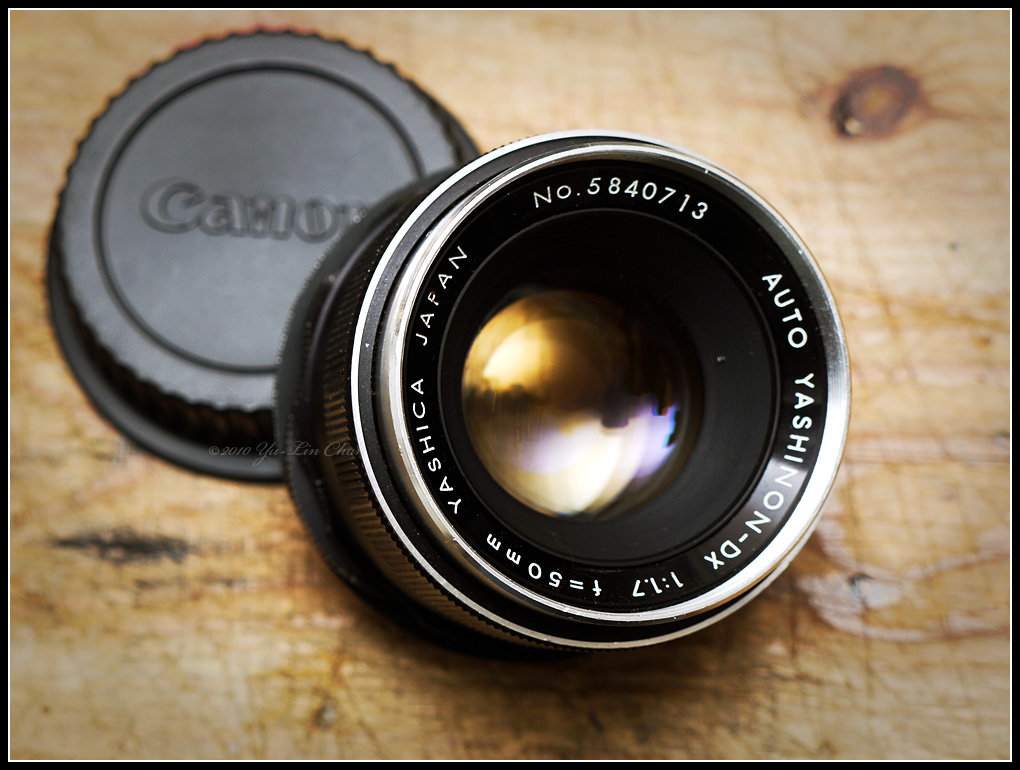
Yashica Yashinon-DX 50mm f1.7 M42 Lens

Yashica was one of the many camera makers that jumped on the M42 mount (also called the Universal Mount) bandwagon. The Yashica TL series were very popular, though not as much as the Spotmatics. I still have a few Yashica M42 bodies sitting on the shelf, from the meterless J to the TL-Eletro. All these cameras are extremely well made and still work today. They typically came with a 50mm/55mm f2 lens as standard. More expensive models usually came with a faster f1.8 or even f1.7 lens. The TL-Super came with a Yashinon-DX 50mm f1.7 lens.

Typical of lenses made in that era, the Yashinon-DX 50mm f1.7 was made to last. After decades, the lens still focuses smoothly as butter. The knurled metal focusing ring gives you a sure, positive grip that transmits joy to your fingers on touch. All lettering, including distance scale, aperture value, and infrared mark, is engraved. Some Yashica M42 lenses do not have a M/A switch for manual aperture stop down, but this one does. A chrome inner lens barrel gives a nice accent that complements the two-tone black & silver coloured TL-Super body.

Like most early lenses, this one does not have multi-coating. The lens is very sharp at the centre even at wide apertures, but the corners are not sharp until significantly stopped down. One of the things I like about the Canon T2i, is the live view with 5x/10x magnification. This really improved the focus accuracy. Colour is slightly subdued but lens like this one was designed mainly for black & white film.

Speaking of live view magnification, I thought I should mentioned that the Panasonic G1 (and possibly other G bodies) has a much better implementation. On the G1, when live view magnification is enabled, it goes back to the non-magnified view as soon as the shutter is half pressed. I like this a lot, because it gives you a glimpse of your composition before tripping the shutter. On the Canon, and probably other makes, once the live view magnification is enabled, it stays enabled until the picture is taken, and then it would revert back to normal live view. This gives me a false impression that I am taking a picture of the magnified portion only. I hope Canon would provide an option in the custom function on a later firmware update.

Back to the Yashinon-DX 50mm f1.7. In terms of image quality, the lens is a so so performer. It's not bad by any means, but the corners could be better. But, then again, should I be complaining when it gives decent results for a few bucks?


Yashica Yashinon-DX 50mm f1.7. Larger Picture.


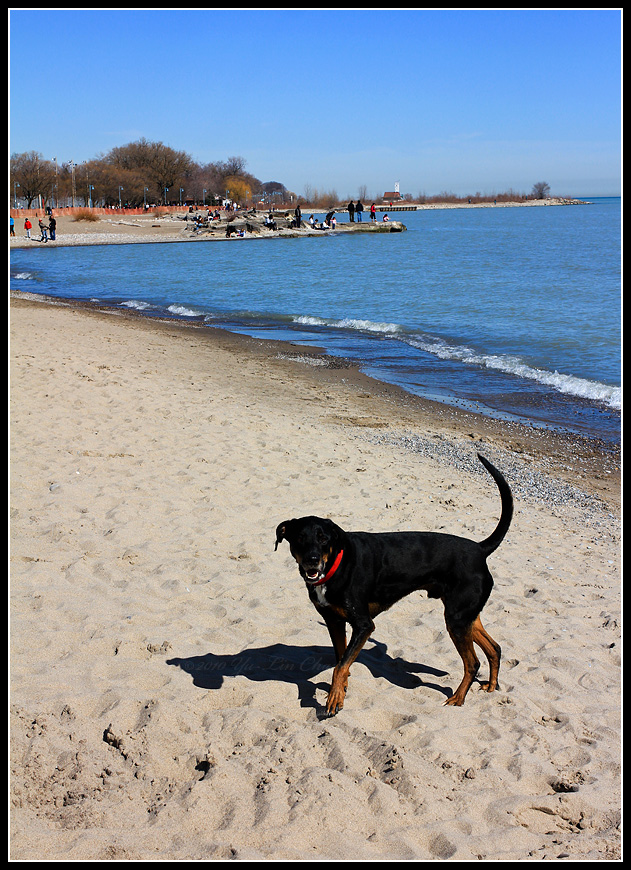
Megan -- Canon T2i & Yashinon-DX 50mm f1.7 @ f2 or f2.8. Larger Picture.


Waiting -- T2i & Yashinon-DX 50mm f1.7. Larger Picture.

Wednesday, March 17, 2010

Flash Back -- Roll Your Own Film Cartridges


Vintage Film Cartridges from left to right: Canon, Leica, Nikon. Back Leica Cartridge container.

Back in the olden days, way before auto focus, auto wind/rewind, auto aperture, auto think, and everything auto-magic, people actually had to do everything by hand, this included the option to roll your own film cartridges. Why even bother doing it yourself when you can buy ready made ones in the store? Well, film, like everything photographic, was very expensive back then. It was much more economical to buy a bulk can of 200-ft film, and roll it yourself. There is one other advantage to to rolling your own -- longer length (more frames), instead of the standard 12, 24 or 36 exposures.

Almost all manufacturers made a version of the DIY film cartridges. Most look similar and does the thing. The cartridge has a locked door that can be rotated to expose a door where you thread the header of the film, then turn the centre wind-up roller to wind the film into the cartridge. Once you have the desired length, you would then cut the film, and close the door, but leave a film leader outside the cartridge. Voila! A film cartridge read to be inserted into the camera for shooting. I do find the Nikon cartridge has one feature others didn't -- an ISO indicator at the bottom of the cartridge.

While cleaning up some of the junk for my annual photography yard sale, I found some of the "bargains" I bought from the Henry's Outlet Centre, as pictured above. All very interesting from historical point of view, but quite useless today. For the younger people who may not even know such things exist, this might be an interesting fact.

Tuesday, March 16, 2010

Contax Carl Zeiss Distagon 35mm f2.8

Have had this lens for a few years. It was in really bad shape with fungus inside lens when I bought it at a camera show. I had it cleaned and it's been working well, but has to be one of the most ugly looking lens I have, in terms of cosmetics. But hey, beauty is only skin deep, eh?

Haven't used this lens for while, because like many of the manual focus lens I have, the butt of the lens hits the mirror of the 5D (don't remember if it did on the 1Ds or not). The T2i does not have this problem. So, I dusted it off and took it out for a spin. Since I am on vacation, and the kids are having march break, we rode our bikes to the Ashbridges' Bay Beach, to give me a place to take some pictures.

Even after years of being discontinued, the Contax mount Carl Zeiss lenses are still very sought after, because they can be mounted on Canon DSLRs (and 4/3, Micro 4/3, Sigma, etc) with adapters. There are reasons for the big following, and the high prices they still command.

First, the T* multi-coating is one of the best. Flare is usually not the problem. Second, build and material is excellent. All Contax lenses used metal extensively and only the focusing and aperture ring skin is rubber. Third, optical quality is universally acclaimed.

The Distagons are among the most favourites for wide angle shooters. Cult lens such as the Contax Distagon 21mm f2.8, was sold for much more than the original price when new, to as much as $4000, until Zeiss released the new version to fit the Canon, Nikon, Pentax and Universal (M42) mount. Insanity! Other less expensive Distagons, such as the 25mm f2.8, 28mm f2.8 and 35mm f2.8 are also immensely popular. I have used all but the 21mm f2.8, and they are all exceptionally good lenses. Some refer to Zeiss as a disease because it's easy to get addicted and hooked. You can never have just one! I have had my share of this disease, and still have a few of them. It's hard to understand the craziness until you start using them.

My copy of the 35mm f2.8, even though it went through some surgeries, still performs admirably. Extremely sharp with exceptionally high resolving power. It's a perfect lens for high resolution sensors like the 18 MP sensor in T2i and 5D2 (if you can make it focus to infinity without hitting the mirror). Amazing details and definition at infinity, as well as at close range. The colour is also one of the traits that so many love about Zeiss. With digital, this is not really a big deal as with film, but if you start out with nice colour, you won't have to go through hoops to get what you are after.

The only thing I am not happy about, is that when mounted on the T2i, it's no longer a wide angle lens; it's more like a standard lens at 41mm. Nevertheless, it's an enjoyable lens to use, and certainly would give lots of satisfaction from the images you create with it.


Not yet the dog days of summer, but a beautiful one -- T2i & Zeiss Distagon 35mm f2.8.


Planning to dig a hole to China -- T2i & Distagon 35mm f2.8. Larger Picture.


Shoes -- T2i & Distagon 35mm f2.8. Larger Picture.


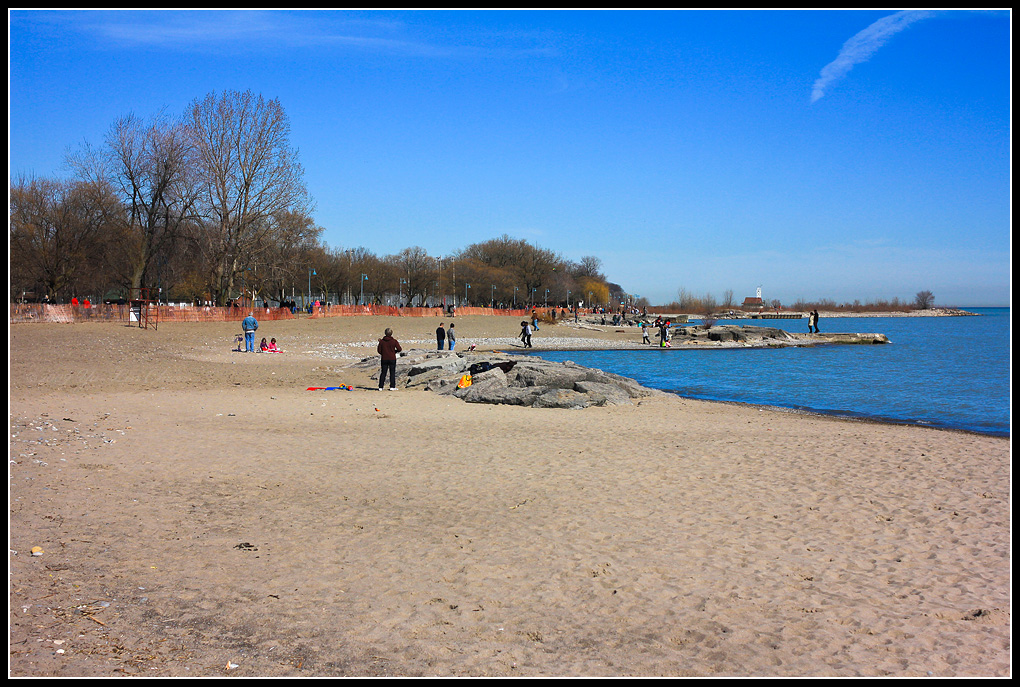
Blue sky but no golden sand. Simulated Velvia effect -- T2i & Distagon 35mm f2.8. Larger Picture.
Sigma 50mm f1.4 EX DG HSM Update


Ryan -- Canon 5D & Sigma EX 50mm f1.4 @ f1.8.

Though not used heavily, I have used the Sigma 50mm f1.4 lens for a few weeks now. Generally I am very happy with the optical performance of the lens. The focusing is also fine on my copy, on both the 5D and the T2i. Focus is quite and fast (though not as fast as the 50mm f1.2L).

The Good

1. Very pleasing bokeh. This is a good portrait lens at wide apertures, on both full frame and APS-C sensor cameras.

2. Well made. Better built than the Canon 50mm f1.4.

3. Optically excellent. Usable wide open.

4. Comes with effective and good looking hood. It's a $#%#@ $60 CAD accessory for the Canon.

Two negative points

1. The paint, especially on the hood, comes off very easily. I normally set the camera/lens down with the hood, and now there is a line of visible where the hood sits on the surface. If you are baby your stuff, you should be aware of this.

2. Expensive. For a normal 50mm f1.4 lens, it's quite a bit more than the OEM Canon 50mm f1.4, although, the Sigma is a better lens optically as well as better made. Sigma products do not hold the resale value very well traditionally, so keep that in mind if you do change equipment often.

The Hood

The hood I was complaining about? It was all my fault. I am so used to Canon lenses where hoods fit by a light twist. The Sigma needs a considerable more force to twist it until it clicks. I did not turn it hard enough to lock it in place, thus it was very loose. All my fault and I am quite happy with the hood. It's long enough for effective shade. The snuggle fit should protect the lens better should it drop on the hood.