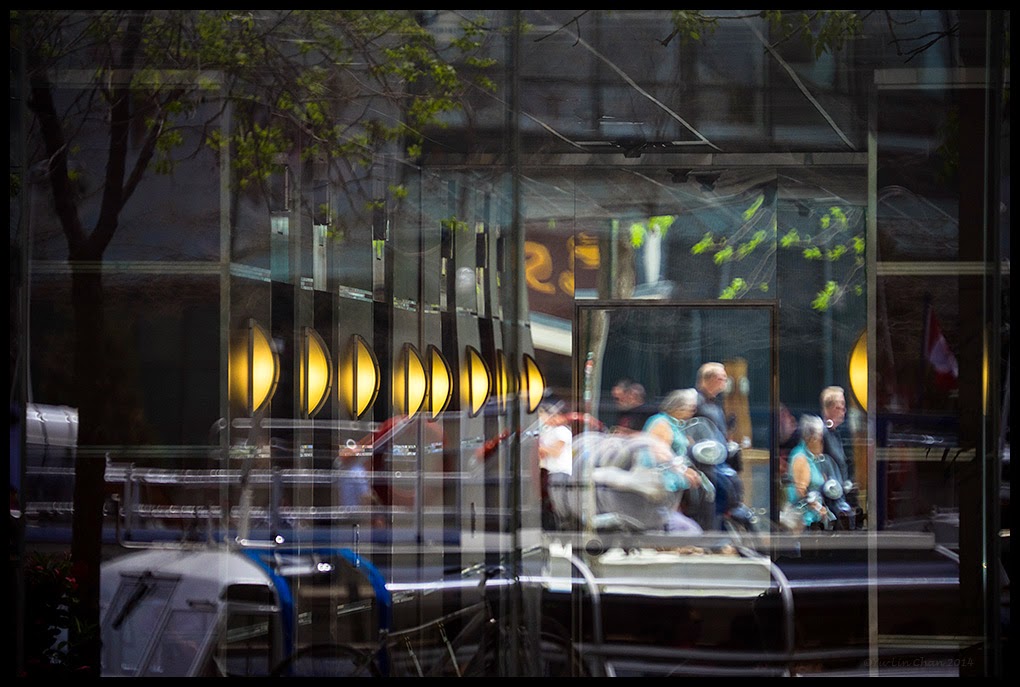
Showing posts with label Mirror Lens. Show all posts

Tuesday, June 3, 2014

Quantaray 500mm f8 Mirror Lens - Another Look

The reason I like going to used camera shows is that sometimes, I can pick up some cheap lenses to try. In most cases, they are cheap for a good reason, but once in a while there could be gems hidden among the rocks.

Not really sure what's happening lately but I have picked up a few mirror lenses from the last few camera shows. I normally would ignore mirror lenses, as they are (were?) not my thing. The Minolta Rokkor-X 250mm f5.6 mirror lens has changed my attitude somewhat about the usability/usefulness of these lenses. Still, I am supremely cheap and I would not pay more than $50 for one of these lenses. The only exception is the Minolta 250mm, because it's so small, but it was still under $100. So far, I have three other mirror lenses aside from the Minolta, which costs from $10 to $40: Soligor 500mm f8.8 (haven't tested it on the A7, but I think it's a piece of junk), Makinon 300mm f5.6 (very good), and the Quantaray 500mm f8 (not bad).

The Quantaray has a T-Mount, like a lot of third party mirror lenses. Fortunately I have lots of T-Mount adapters and I used the T-Mount to M42, which in turn, mounts on the Yeenon helicoid to give me even closer focus capability. The lens is very well made like the Makinon 300mm f5.6 and it feels solid and focuses smoothly.

I tried the Quantaray 500mm f8 on the NEX-6 before. It's usable, but definitely too long at the equivalent of 750mm. The small angle of view makes focusing extremely hard to do. For those pictures that turned out, focus wise, the quality isn't bad at all. On the A7, which I have been using with the Quantaray, focusing is much easier, but that's relative; mirror lenses have very short focus throw and due to the focal length, a small adjustment/movement means the focus is off by quite a bit. Lens like this are meant to be used on tripod, or least on monopod, but I am not really a tripod kind of person, unless it's absolutely necessary, so all the shots were done handheld. I am quite surprised I get many more keepers than when using it on the NEX-6.

Do I like the Quantaray 500mm f8? I would say yes on full frame, only because it's relatively cheap and you get a lot of reach for that kind of money.

Man and his best friends - Sony A7 & Quantaray 500mm f8. Click for larger.

Steel rods - Sony A7 & Quantaray 500mm f8. Click for larger.

The Welder - Sony A7 & Quantaray 500mm f8. Click for larger.

Bike Posts - Sony A7 & Quantaray 500mm f8.

Monday, June 2, 2014

Revival of Mirror Lenses?

There seems to be a trend that mirror lenses are becoming more popular. In fact, there are new mirror lenses being made (Tokina and Samyang 300mm f6.3). I think the main reason for this surging popularity is due to the high ISO capability of today's digital cameras. Back in the old, film days, mirror lenses were designed as a compromise. You trade larger maximum aperture of glass lenses for lighter, smaller, but very small maximum aperture, typically f5.6 to f11, except the Russian Rubina 300mm mirror lens is very fast at f4.5.

Mirror lenses are much cheaper to make and most optical manufacturer made at least one design. Canon, Nikon, Pentax, Minolta, Zeiss, and of course the Russians. But the most popular (cheaper) ones were made by third party lens makers, like Sigma, Vivitar, Tamron, and a plethora of rebadged brands like Makinon, Quantaray, and many others. Typical focal length ranges from 250mm Minolta RF Rokkor-X to the monstrous 5200mm made by Canon.

There are severe limitations to the mirror lens design. Other than the already mentioned small maximum aperture, the other is that the aperture is fixed. Furthermore, image quality is not comparable to the traditional glass lenses and for this reason, many people viewed mirror lenses are a cheap alternative to the real thing and wouldn't even consider using one, however cheap they were. Lastly, all but one mirror lens can auto focus, and that's the Minolta (Sony) AF 500mm f8.

One of the reasons people turned away from mirror lenses is the very dark viewfinder they see when the mirror lens is attached to the camera. Remember that all film cameras had optical viewfinders; the smaller the maximum aperture the darker the viewfinder becomes. If you ever tried a 500mm f8 mirror lens on a camera with optical viewfinder, you will see why; it's next to impossible to focus with such a dark viewfinder. Split screens do not work if the aperture is f5.6 or smaller. But dark viewfinder is just one of the inconveniences. The other, more severe shortcoming is the slow shutter speed caused by the small aperture and the need for faster shutter speed to counteract the shake due to long focal length. Most people shot ISO 100 to 200 film, and 400 is pushing it unless you are shooting black and white. So, that 500mm f8 mirror lens is pretty much limited to sunny days and mostly tripod bound, or you will get blurry pictures caused by mis-focus and/or too slow a shutter speed. As an example, for a 500mm f8 lens, you would need about 1/500s on full frame to ensure the picture is reasonably sharp, but on a cloudy or overcast day, you would have to crank up the ISO to 3200 in most some situations to attain the 1/500s shutter speed. For film, ISO 1600 is already hard to find and expensive, and the grain is the size of a golf ball. If you have never seen what picture looks like with the ISO 1600 film, you are just spoiled by the modern CMOS image sensor's high ISO capabilities :)

There are some very fine mirror lenses and three of them come to mind: Minolta AF 500mm f8, the Carl Zeiss Mirortar 500mm f8, and the Russian Rubinar 300mm f4.5, possibly the brightest mirror lens made for 35mm format. All of these lenses are very pricy or difficult to find. Fortunately, there are some gems amount the third party mirror lenses. I briefly looked at the Makinon 300mm f5.6, which is actually quite a nice lens. I am sure there are many more out there.  My advice is not to let the name on the lens sway you. Try it for yourself. Often the noname lens was made by the same manufacturer as a more expensive lens with a different name.

Lamp Post - Sony A7 & Quantaray 500mm f8 Mirror Lens.

Wednesday, May 28, 2014

The Minolta Rokkor-X RF 250mm f5.6 Alternative

If you have been looking for a small mirror lens lately, you have no doubt checking out the Minolta RF 250mm f5.6, arguably the smallest 35mm format mirror lens in the world. The tiny lens (for the focal length) is about the same size as the Rokkor 58mm f1.2; very desirable lens for hand-holdability and discreteness, plus its image quality is quite OK as mirror lens goes. But the price of this lens will make you shake your head in disbelieve: more than $1000! That's a lot of money for a lens that does not have outstanding image quality. The world has gone crazy.

Enter the Makinon 300mm f5.6. Slightly longer focal length and slightly larger but has the same f5.6 aperture as the Minolta counterpart, but at about 5% of the price.  The Minolta has a 62mm filter size, while the Makinon has 67mm filter size. The old Outlet Store used to sell these lenses for around $60, but now they are going for almost $200 on eBay. Insanity! I have had a few of them over the years, but eventually got rid of them due to lack of image quality when compared to glass lenses. I bought another one this Sunday at the Camera Show in Woodbridge for $40, just because I am curious how it would compare to the Minolta.

As it turns out, there is not a whole lot of differences between the two lenses. Both of them are well made and focus smoothly and both weigh about the same. The Minolta has a glass filter built-in the front while the Makinon does not. One feature the Makinon has over the Minolta, is the close-focus capability; the Makinon has a pseudo macro magnification ratio of 1:4 and focuses much closer than the 2.5m of the Minolta. In terms of image quality, the Minolta has a very slight edge in contrast and sharpness, but not much more. Definitely not worth the outrageous price difference.

The Makinon 300mm f5.6 is a good alternative to the Minolta, if you can live with a slightly larger size (few millimeters taller and a bit wider in diameter). Definitely worth $40, but not $200, in my opinion.

Left: Makinon 300mm f5.6, Middle: Minolta RF 250mm f5.6, Right: Canon nFD 50mm f1.2

Lunch Break - Sony A7 & Makinon 300mm f5.6. Click for larger.

Red Chairs - Sony A7 & Makinon 300mm f5.6. Click for larger.

Reflections - Sony A7 & Makinon 300mm f5.6. Click for larger.

Walking out of the tunnel - Sony A7 & Makinon 300mm f5.6. Click for larger.

Tree Trunks - Sony A7 & Makinon 300mm f5.6. Click for larger.

Friday, February 21, 2014

Minolta RF Rokkor-X 250mm f5.6 - Another Look

I wrote about my first impression, and the second look, plus many photo samples of this Minolta RF Rokkor-X 250mm f5.6 mirror lens over the last couple of years. It has proven itself for the purpose of its design: small, lightweight, and inexpensive. The inexpensive part does not apply any more because this lens is selling at a few times more than its original price, but it's truly small and light. This lens attaches to the NEX-6 and still fit in my coat pocket, even with its hood. The small size is less intimidating if you are taking pictures of people, especially strangers. The petite size makes me look like a tourist taking pictures :)

As much as I dislike mirror lenses in general, I am warming up to this little lens. It's not the sharpest lens in the world but it's excellent being a reflex lens. So many times I wanted to sell it to fund the upgrade of the camera, but could not pull the trigger. There will always be newer and better cameras, but a lens like this is getting harder and too expensive to buy if I regret the sale and want it back later.

One thing I do wish is in-body stabilization on the NEX-6. It would make using long lenses much easier, especially for focusing. This is the main reason I want an Olympus E-M1 or E-M5. For the time being, I enjoy using it and it can come in handy in many situations, like the pictures from yesterday's blog entry.

Sparrow - NEX-6 & Minolta Rokkor-X 250mm f5.6 Mirror Lens. Click for larger. 

Ongiara - NEX-6 & Minolta Rokkor-X 250mm f5.6 Mirror Lens. Click for larger. 

Little Richard? - NEX-6 & Minolta Rokkor-X 250mm f5.6 Mirror Lens. Click for larger. 

Donut Rings - NEX-6 & Minolta Rokkor-X 250mm f5.6 Mirror Lens.  

Monday, January 9, 2012

Minolta RF Rokkor-X 250mm f5.6 - First Impression

I have had a few mirror lenses in the last few years, but have never kept any except one cheap Makinon 300mm f5.6, which I keep for occasional, for the same reasons that people don't like mirror lenses: smaller aperture, hard to focus, dark view finder (with DSLRs), no aperture control, and usually unsharp.  Yesterday I received the Minolta RF Rokkor-X 250mm f5.6 so I went out with it today and gave it a try.

web_DSC00864
Lamps -- NEX-5N & Minolta RF 250mm f5.6.

This Minolta RF lens is very light, and very small.  It's about the size of the Vivitar Series-1 28mm f1.9, but much lighter.  The build quality is excellent and it focus very smoothly.  One of the best features I like, is that there is a protective glass on the front of the lens.  Most mirror lenses have exposed mirror surfaces, and mirror surfaces are very easy to scratch, therefore, extreme care is needed when cleaning it.  You can clean this lens like a normal lens since has a hard glass surface.

web_DSC00810
Park Bench -- NEX-5N & Minolta RF 250mm f5.6.

As far as mirror lenses go, this one is the sharpest one I have used.  Sure, the Zeiss Mirotar I am sure will be better, but it's much harder to find and more expensive.  This lens, like most older lenses, suffer from purple/green fringing on high contrast areas, though not as bad as many other lenses.  As the signature of all mirror lenses, the out of focus areas highlights are seen as doughnut rings.  Some people like them, but many don't.  I don't mind them, actually.  Doughnuts can make some interesting backgrounds.

web_DSC00927
Chains -- NEX-5N & Minolta RF 250mm f5.6.

The most frustrating aspect of long lenses is the very narrow angle of view, and thus it amplifies every small movements of the lens, making it extremely hard to focus.  I shot all the pictures handheld today, with a Speed Priority setting it to 1/320s, which is still too slow, but often good enough thanks to the very excellent NEX-5N's very short shutter lag.  The ISO is often at 800 or even 3200 even in the middle of the day, depending on how much light the scene has.

Some mirror lenses, such as the Tamrons, has a very close focus distance of 1.7 meters and magnification ratio of 1:2.7.  This one does not have a claimed macro mode, but the minimum focusing distance is 2.5 meters, which is not too bad.  Not sure what the magnification is, though.

After one day of use, I can understand why people want this lens.  I never had this much luck before using a mirror lens and get so many in-focus pictures.  The shorter 250mm focal length is part of the reason, but I think the small size and easy hand holding contributes to the fact.  Most of all, it has very good optical quality as a mirror lens.

web_DSC00894
Lamp -- NEX-5N & Minolta RF 250mm f5.6.